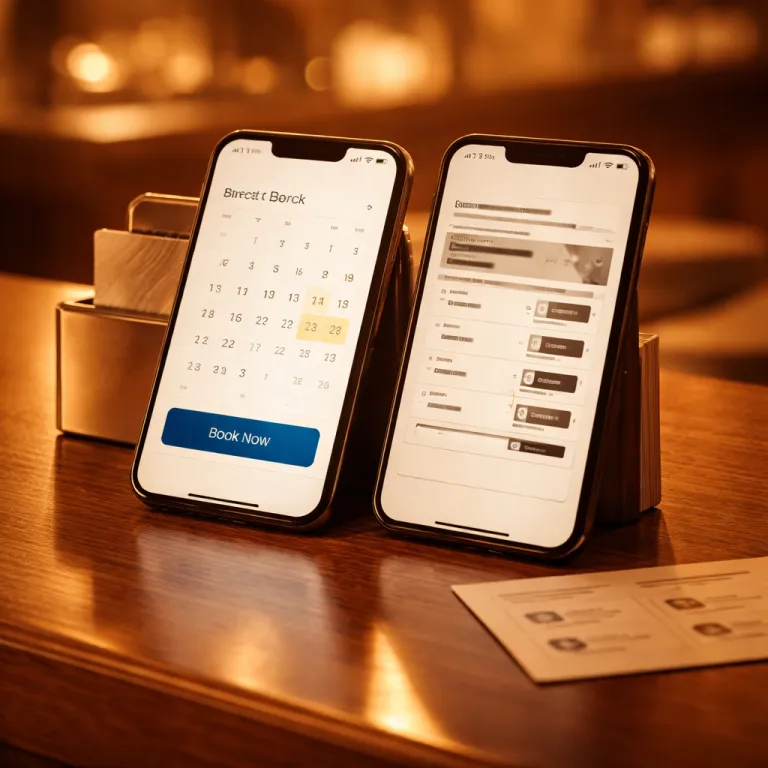
Why the hotel mobile booking experience is now your primary direct battleground
For most travellers, the first serious interaction with your hotel now happens on a mobile device. GuestCentric’s 2023 “Hotel Digital Lab” findings indicate that 56–60% of website sessions and over half of direct reservations for many urban properties now originate on smartphones. Yet the average hotel mobile booking experience still feels slower, clunkier, and less reassuring than the OTA equivalent. That gap is no longer a minor UX detail; it is a distribution strategy problem that quietly diverts revenue from direct channels into intermediary systems.
Mobile hotel booking has evolved from a niche convenience to the default process for last minute stays. TravelBoom Marketing’s 2023 Leisure Travel Trends Study, based on a sample of more than 2,000 travellers, reports that over 70% of same-day and next-day reservations are made on phones. Combined with GuestCentric’s observation that mobile already accounts for more than half of hotel bookings via digital channels in many markets, this means your mobile bookings are now the frontline where rate parity, cancellation policy, and room type clarity either win or lose the guest. When your website underperforms on mobile technology, OTAs monetise the gap with one-tap booking, stored payment details, and richer content, while your own hotel systems and staff carry the cost of fulfilment without the benefit of a direct guest relationship.
For distribution managers and B2B sales leaders, the question is no longer whether mobile bookings matter, but how the hotel mobile journey compares to the OTA benchmark at every step. The hotel mobile booking experience must be audited like any other channel, with clear KPIs for mobile conversion, abandonment by device, and revenue per mobile session. When you treat mobile booking as a core distribution channel rather than a resized desktop website, technology enhances both guest satisfaction and net rate performance, and your direct share can grow without sacrificing margin to intermediaries.
Mapping the friction: where mobile guests abandon your direct booking flow
Most hotels underestimate how many guests start a booking on a mobile device, hit friction, and quietly switch back to an OTA app. The typical pain points are brutally consistent: slow page load, clumsy date pickers, unclear room comparisons, and a payment step that feels riskier than the OTA equivalent. Each extra field, each unnecessary check process, is effectively a commission you pay to the intermediary that finishes the booking.
Speed is the first filter for a credible hotel mobile booking experience, and anything slower than around three seconds on 4G will push travellers back to their preferred OTA. Google’s Web Vitals guidance shows that as mobile load time increases from roughly two to over five seconds, bounce rates tend to rise sharply, so slow pages are likely to lose a significant share of visitors. Use tools like Google Lighthouse or WebPageTest to benchmark your website on real mobile networks, and track separate KPIs for mobile bookings versus desktop bookings to see how much revenue you are losing to latency alone. As a practical benchmark, aim to cut at least 300–500 KB from your JavaScript payload, compress images to under 200 KB where possible, and reduce third-party scripts to only those that directly support sales. When you streamline your booking engine’s hotel systems calls in this way, technology enhances both the guest experience and your ability to hold rate without discounting.
The second friction cluster sits inside the booking process itself, where guests struggle to compare room types, understand inclusions, or trust the final price. A clean mobile booking flow should show two or three key room attributes, clear cancellation rules, and total stay cost before the payment step, while offering mobile-specific options like Apple Pay, Google Pay, and stored cards for returning guest profiles. Hotels that introduce digital wallets often see a 3–5% uplift in mobile conversion because the payment step feels faster and safer. For B2B distribution leaders focused on advanced direct booking strategies, aligning your mobile hotel UX with your broader revenue playbook is essential, and resources on elevating hotel revenue with advanced direct booking strategies can help you connect UX decisions with channel mix outcomes.
Designing a mobile first direct journey that can compete with OTA apps
Winning the hotel mobile booking experience starts with accepting that the phone screen is not a small desktop, but a different context of travel decision making. Guests are often on the move, distracted, and using one hand, so every tap, scroll, and check step must be ruthlessly optimised. The goal is not aesthetic perfection; it is a booking process that feels as fast and safe as the OTA app they already trust.
A mobile first website should prioritise above-the-fold essentials on the first screen of a mobile device: dates, occupancy, a clear call to action, and a visible reassurance of secure payment and flexible cancellation. Below that, concise content and strong visuals must explain why this hotel, this room, and this rate are the right choice for the guest, without forcing endless scrolling or complex filters. One city-centre hotel, for example, moved its date selector and “Book now” button into the first viewport, simplified copy, and added a short trust message about secure payment; within six weeks, mobile conversion improved by nearly four percentage points and abandonment on the first step of the booking engine fell by more than 10%. Click-to-call and WhatsApp integration give travellers a direct line to staff when questions arise, which often turns a hesitant search into a confirmed booking and improves guest satisfaction before arrival.
The booking engine itself must be built for mobile technology, not just resized, with large tap targets, minimal typing, and support for mobile key or digital services where your systems allow. Features like online check options, pre-arrival upsell of room categories, and the ability to manage check-ins from a mobile device can be surfaced as benefits during the booking, reinforcing that technology enhances the entire stay, not just the transaction. To ensure your booking engine integration does not become the weakest link in the chain, benchmark it against best practices using resources on seamless hotel booking engine integration, and work closely with your provider to align mobile UX with your distribution and revenue strategy.
From mobile booking to mobile check in: connecting digital touchpoints across the stay
For many hotels, the mobile booking, mobile check in, and mobile key are treated as separate projects, which fragments the guest experience. Travellers, however, see one continuous journey where the same mobile device should handle booking, payment, online check, and even room access. When your hotel systems and processes are aligned, technology enhances both operational efficiency and the perceived quality of service.
Start by mapping the full check process from confirmation email to arrival at the front desk, and identify where mobile technology can remove friction without eroding human contact where it matters. A well designed pre-arrival flow can invite guests to complete an online check, confirm arrival time, and choose preferences, while also promoting ancillary services that lift revenue per stay. One resort that added a simple pre-stay form for digital registration and late check-out offers saw more than 40% of guests complete it, with a measurable increase in upsell revenue and shorter queues at peak arrival times. When mobile check options are clearly explained during the booking and reinforced in pre-stay communications, guests are more likely to use them, which reduces front desk queues and frees staff to focus on high value interactions.
Mobile key and digital room access are no longer experimental features reserved for luxury brands; they are becoming expected in urban hotels and large groups. Integrating mobile key into your app or web-based wallet, and linking it to your PMS and other hotel systems, allows guests to bypass traditional check-ins when they prefer speed over ceremony. Recent GuestCentric and TravelBoom datasets, alongside industry case studies, note that innovation now includes digital room keys and mobile check in, underlining how tightly the hotel mobile booking experience is connected to operational systems, and how a coherent strategy can improve both guest satisfaction and staff productivity.
Measuring the mobile gap and rebalancing direct vs indirect sales
Distribution leaders cannot manage what they do not measure, and the mobile gap between your website and OTA apps is no exception. You need a clear, quantified view of how your hotel mobile booking experience performs by device, channel, and market segment. Only then can you make informed decisions about where to invest in technology, content, and B2B partnerships.
At a minimum, track mobile conversion rate, abandonment by step in the booking process, share of mobile bookings in total direct bookings, and revenue per mobile session, segmented by traffic source. Compare these metrics with OTA performance data where available, and run regular parity audits on mobile to ensure that rate, room type, and cancellation conditions are aligned, because any perceived mismatch will push guests back to intermediaries. Tools like session replay and funnel analysis can reveal where travellers hesitate, which fields they skip, and how often they use click-to-call or chat, giving you concrete evidence to refine both UX and staff scripts. As a practical implementation step, define two or three key replay checkpoints—search results, room selection, and payment—and review a small sample weekly to spot recurring friction.
Strategically, the rise of mobile bookings forces a sharper view on direct versus indirect sales, especially for groups balancing CRS, GDS, OTA, and wholesaler contracts. When your mobile hotel journey is weak, you are effectively outsourcing the most profitable part of the funnel to partners who control the guest relationship and upsell path, even though your équipe still delivers the room and service. To move from theory to action, build a simple optimisation checklist: set target thresholds for mobile load time and conversion, choose one KPI to improve per quarter, run an A/B test on a single change such as payment options or room layout, and measure the lift in direct mobile revenue. For deeper analysis of how new digital behaviours and even gaming inspired interfaces are reshaping B2B distribution, the article on how gaming style mechanics redefine B2B distribution and channel strategy offers useful parallels for hotel check flows, loyalty design, and the way technology enhances engagement across channels.
FAQ
What is mobile hotel booking and why does it matter for distribution ?
Mobile hotel booking is the process of reserving hotel rooms using mobile devices, and it now represents a significant share of total demand. GuestCentric’s recent reports indicate that for many properties, mobile already accounts for more than half of direct digital bookings. It matters for distribution because the hotel mobile booking experience often determines whether guests book direct on your website or complete the booking through an OTA app. When your mobile booking process is slower or less reassuring than intermediaries, you lose both revenue and control over the guest relationship.
How can hotels improve the mobile booking journey without a full redesign ?
Hotels can improve the mobile journey by focusing first on speed, clarity, and payment convenience rather than a complete visual overhaul. Compressing images, reducing unnecessary scripts, and simplifying the booking steps can quickly improve performance on any mobile device. As a starting target, aim for a mobile load time under three seconds on 4G and reduce form fields in the booking flow to only those required for payment and legal compliance. Adding click-to-call, WhatsApp support, and modern payment options like Apple Pay or Google Pay often lifts conversion even before deeper design changes.
What role do mobile check in and mobile key play in guest satisfaction ?
Mobile check in and mobile key extend the hotel mobile booking experience into the stay, turning the phone into a continuous service tool. Guests who value speed and autonomy appreciate being able to complete check ins before arrival and go straight to their room without waiting at the front desk. When implemented well and supported by hotel systems, these features reduce queues, free staff for higher value interactions, and improve overall guest satisfaction scores, especially among frequent business travellers and tech-savvy leisure guests.
Are native apps necessary, or is a mobile optimised website enough ?
A mobile optimised website with a strong booking engine is essential for all hotels, while native apps make more sense for larger groups or properties with high repeat business. For many independent hotels, a fast, responsive website or Progressive Web App can deliver an excellent hotel mobile booking experience without the cost and maintenance of a full app. The right choice depends on your guest mix, loyalty strategy, and ability to drive regular app usage, so any app project should be backed by clear adoption and retention targets.
What basic safeguards should hotels apply to mobile bookings ?
Hotels should ensure device compatibility across major mobile operating systems and browsers, and use secure payment methods that guests recognise and trust. It is essential to verify booking details before confirmation, both through clear on-screen summaries and accurate confirmation emails or messages. These safeguards protect guests, reduce disputes, and reinforce confidence in your direct mobile channel, while also supporting compliance with data protection and payment security standards.
References
GuestCentric – Hotel Digital Lab reports on mobile share of hotel bookings and direct channel performance, including smartphone session and reservation data for urban properties.
TravelBoom Marketing – 2023 Leisure Travel Trends Study on last minute bookings and mobile behaviour, based on survey responses from more than 2,000 travellers.
Google – Web Vitals and performance benchmarks for mobile web experiences, including guidance on how page speed and Core Web Vitals metrics correlate with bounce rate and user engagement.