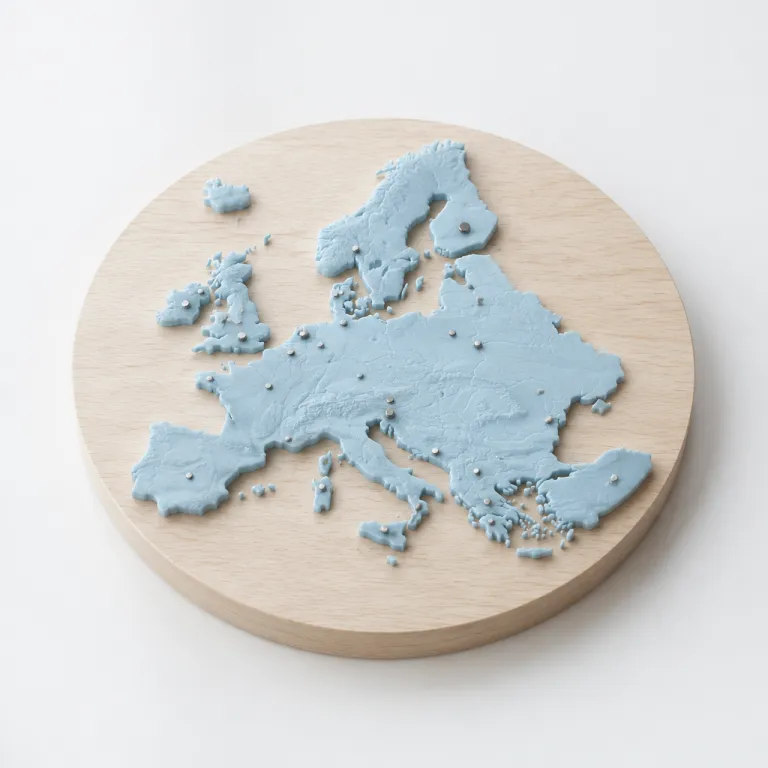
Why the best DMC partners in Europe matter for B2B hotel sales
For hotel distribution leaders, the best DMC Europe partnerships now sit at the crossroads of B2B sales, wholesale contracting, and high value group demand. A strategically chosen destination management company can shift your mix away from opaque allotments toward curated travel experiences that command higher average daily rates and longer stays. When a hotel group treats each DMC as a long term management company partner rather than a tactical buyer, the impact on meetings, incentives, conferences, and events becomes measurable across the entire Europe network.
In practice, a strong DMC in Europe acts as both local expert and extension of your sales team, translating brand standards into relevant incentive travel programs for each destination. The best DMC Europe candidates already manage complex corporate events, conferences meetings, and multi country tours, so they understand how to package rooms, meeting space, and ancillary services into profitable travel programs. For channel managers, this means fewer fragmented requests and more consolidated group business flowing through controlled rate plans, with clear data on production, seasonality, and cancellation behavior that can be benchmarked against other B2B channels.
Hotels that align early with leading destination management companies in key markets such as the Faroe Islands, Austria, the Czech Republic, North Macedonia, and Bosnia Herzegovina gain a structural advantage. These Europe DMC partners can steer high margin incentive groups and conferences to properties that offer reliable availability, transparent conditions, and responsive revenue management. A Central European hotel group recently reported in an anonymized internal review that shifting 15 percent of its group segment from anonymous allotments to named DMC programs increased ADR by 9 percent over two years while maintaining similar occupancy, illustrating how the right travel DMC portfolio can become as important as your strongest OTA or GDS relationship, especially for shoulder periods where events and tours stabilize occupancy without eroding public pricing.
Redefining wholesale and tour operator models with DMC driven demand
Wholesale distribution is under pressure, and the best DMC Europe alliances offer a pragmatic path beyond pure static allotments. As bedbanks and traditional tour operators face margin compression, destination management companies step in with curated travel experiences that justify rate integrity and protect brand positioning. For hotel groups, this shift from anonymous volume to named companies DMC and identifiable travel programs is essential to maintain control over B2B pricing and to understand which segments truly drive profitability.
Strategic account managers who review their wholesale distribution models now benchmark each DMC Europe partner on total value, not only on room nights. They assess how each travel DMC supports events, conferences, and incentive travel, and how often those programs convert into repeat tours or recurring corporate events. A useful framework for this evaluation is outlined in the analysis of which wholesale distribution models will survive AI and direct booking, where control of data and relationships clearly outperforms anonymous intermediaries.
In this context, Europe DMC partners that can package multi destination tours across the Czech Republic, North Macedonia, Bosnia Herzegovina, and other emerging markets become especially valuable. They reduce fragmentation by consolidating group and incentive demand that might otherwise be scattered across smaller local companies with limited reporting capabilities. When your revenue and distribution teams can see full details of each tour, from room type mix to ancillary services, they can finally compare wholesale and DMC performance on a like for like basis and adjust strategy with confidence, rather than relying on partial reports or anecdotal feedback.
Designing a DMC segmentation strategy for European destinations
To work effectively with the best DMC Europe partners, hotel groups need a clear segmentation strategy by destination and by type of demand. Not every destination management company is equally strong in incentive travel, conferences meetings, or leisure tours, so mapping strengths is critical. A structured segmentation allows channel managers to align each DMC in Europe with the right rate plans, inventory rules, and B2B sales priorities, and to avoid overlapping offers that confuse corporate buyers.
Start by classifying each management company according to its core travel experiences and primary source markets, then overlay this with your own hotel portfolio positioning. Some management companies excel at high end incentive events in capital cities, while others specialize in nature based group tours in places such as the Faroe Islands or alpine regions served by a DMC Austria partner. One Central European chain, for example, created three DMC tiers—strategic, growth, and tactical—based on revenue, data quality, and segment focus; within 12 months, this segmentation increased conversion on DMC proposals by 7 percentage points in an internal performance review. This segmentation should be shared across your CRS, revenue management, and sales teams, so everyone understands which companies DMC to prioritize for which type of event or group.
Once segmentation is in place, refine your contracting and channel rules to reflect the role of each Europe DMC partner. For example, a local expert in the Czech Republic that consistently delivers corporate meetings conferences might receive more flexible meeting space options and bundled services, while a Bosnia Herzegovina travel DMC focused on leisure tours could be steered toward shoulder dates. Resources such as the playbook on elevating B2B hotel sales strategies through distribution channel management can help structure these decisions so that DMC relationships support long term business growth rather than short term volume.
Operational excellence with DMCs : data, contracting, and channel rules
Operational discipline is what separates a good DMC relationship from the best DMC Europe partnerships that consistently deliver profitable business. Distribution leaders must insist on structured data sharing so that every event, tour, or incentive program is traceable in the PMS and CRM. Without this level of detail, it becomes impossible to compare the performance of different destination management companies or to optimize channel mix across Europe, especially when group demand fluctuates by season and city.
Contracts with each DMC in Europe should define clear rules for rate parity, inventory release, and services included, while leaving room for tailored incentive travel packages. When a management company brings a large group for conferences meetings or corporate events, the agreement should specify how meeting space, F&B, and ancillary services are priced and reported. In one 2023 internal review by a pan European hotel group, properties that used standardized DMC addendum templates reduced billing disputes by 18 percent year on year, according to the anonymized audit summary. This clarity protects both the hotel and the travel DMC, and it reduces friction for local expert teams on the ground who must execute complex events under tight timelines.
Channel managers can then encode these rules into the CRS and channel management systems, ensuring that DMC Europe bookings flow through dedicated rate codes and segments. This approach allows revenue managers to see how Europe DMC partners in markets such as North Macedonia, Bosnia Herzegovina, the Czech Republic, and the Faroe Islands perform relative to OTAs, GDS, and other wholesale companies. Over time, the data reveals which management companies consistently deliver high value tours and incentives conferences, and which require renegotiation or reduced exposure, creating a continuous improvement loop for B2B hotel distribution.
Aligning hotel meeting and event capacity with DMC driven demand
For many hotel groups, the best DMC Europe relationships are built around meetings, incentives, conferences, and events rather than pure room nights. Destination management companies are often the first to know when a corporate client is planning a regional roadshow, a leadership incentive travel program, or a pan European conference. When hotels align their meeting and event capacity planning with these early signals, they can secure higher yielding business and optimize space utilization instead of relying solely on last minute RFPs.
Sales and distribution leaders should work with each DMC in Europe to map typical lead times, preferred destinations, and seasonality for group events and tours. A DMC Austria partner might drive winter incentives conferences in alpine resorts, while a local expert in the Czech Republic could focus on spring conferences meetings in Prague, and a Europe DMC in the Faroe Islands might specialize in nature based corporate events during summer. In a recent case shared at an anonymized Nordic industry roundtable, a regional hotel group that integrated DMC forecasts into its meeting space revenue management reported a 6 percent uplift in RevPAS (revenue per available square meter of meeting space) over one budgeting cycle. Tools and frameworks for strategic account management of hotel meeting and event space capacity help structure these conversations so that both hotels and management companies can plan inventory and pricing more intelligently.
When meeting planners, DMC account managers, and hotel sales teams share accurate forecasts and program details, everyone benefits from reduced last minute pressure and better financial results. Hotels can prioritize high value travel programs and group tours on peak dates, while steering smaller events to shoulder periods where they still add profitable volume. Over time, this collaborative approach turns each travel DMC into a true management company partner, capable of shaping demand patterns across multiple destinations in Europe rather than simply reacting to availability.
Expanding across secondary European destinations with specialist DMC partners
Growth in B2B hotel sales increasingly comes from secondary and emerging destinations, where the best DMC Europe specialists can unlock demand that global OTAs and GDS do not yet fully address. Markets such as North Macedonia, Bosnia Herzegovina, and the Faroe Islands are gaining attention for authentic travel experiences and distinctive corporate events. For hotel groups, partnering with the right Europe DMC in these locations can create new revenue streams while diversifying geographic risk and reducing dependence on a few saturated hubs.
Specialist destination management companies in these markets often operate as agile management companies with deep local relationships, capable of orchestrating complex tours and incentives conferences across multiple cities or even neighboring countries. A travel DMC based in the Balkans might combine group tours through Bosnia Herzegovina and North Macedonia, while a DMC Austria partner connects alpine incentives with city based conferences meetings. By integrating these companies DMC into your distribution and sales strategy, you extend your reach without overextending your internal teams, and you gain access to niche experiences that are difficult for global intermediaries to replicate.
To maximize ROI, distribution leaders should treat news from local DMC partners as early indicators of shifting demand, whether for leisure tours, incentive travel, or hybrid meetings conferences. Regular reviews of program details, guest feedback, and ancillary services consumed help refine which destinations and which management companies deserve increased focus. Over time, a curated portfolio of the best DMC Europe partners across both primary hubs and secondary destinations becomes a competitive asset, enabling hotel groups to respond quickly to new B2B travel trends while maintaining control over pricing, brand, and channel mix.
Key figures shaping DMC and wholesale partnerships in European hospitality
- According to the European Travel Commission’s “European Tourism: Trends & Prospects” report for 2019 (Q4 edition), international tourist arrivals to Europe exceeded 745 million in the last full year before the global health crisis, representing roughly half of worldwide tourism and underlining the scale of potential demand for DMC led group and incentive travel.
- Data from the Global Business Travel Association’s “BTI Outlook” series (2019 global report) indicates that meetings, incentives, conferences, and events can account for 20 to 30 percent of total hotel revenue in many urban properties, which explains why the best DMC Europe partners focused on corporate events are so strategically important for city portfolios.
- Research by the Events Industry Council in its “Global Economic Significance of Business Events” study (2018 release) shows that business events generated more than 10 million direct jobs worldwide in a recent reporting period, highlighting the economic weight of conferences meetings and the role of destination management companies in channeling this demand.
- Industry benchmarks from STR, summarized in several EMEA performance reviews (for example, STR EMEA Hotel Review 2018–2019), suggest that group and contract segments often achieve 10 to 15 percent higher length of stay than transient business in key European cities, reinforcing the value of long term partnerships with Europe DMC specialists that focus on multi day tours and travel programs.
- Surveys by the Incentive Research Foundation, including the “IRF Industry Outlook” series (2020 and 2021 editions), report that over 60 percent of companies using incentive travel expect budgets to grow or remain stable, which supports the case for hotel groups to deepen relationships with travel DMC and management companies that design high impact incentives conferences across Europe.
FAQ about working with DMC partners in European hotel distribution
How should hotels evaluate which DMC partners in Europe to prioritize ?
Hotels should assess each DMC on production history, data transparency, and alignment with target segments such as incentive travel, conferences meetings, or leisure tours. Priority should go to destination management companies that share detailed reporting, respect rate integrity, and demonstrate consistent conversion from proposals to confirmed events. Geographic coverage, local expert capabilities, and feedback from corporate clients are also critical evaluation criteria, especially when comparing multiple Europe DMC options in the same destination.
What is the main difference between a DMC and a traditional wholesaler ?
A traditional wholesaler typically focuses on room inventory and static or semi dynamic rates, often with limited visibility into the end customer or event purpose. A DMC in Europe usually designs complete travel programs, including transfers, activities, meetings, and corporate events, and therefore has deeper insight into client objectives. This broader scope allows the best DMC Europe partners to create higher value packages that support both hotel revenue and guest satisfaction, while giving hotels clearer line of sight on which segments are driving demand.
How can channel managers integrate DMC bookings into their distribution strategy ?
Channel managers should assign dedicated rate codes and segments for DMC Europe bookings, ensuring that all tours, incentives, and conferences are captured accurately in the PMS and CRS. Clear channel rules and contracts help prevent overlap with OTA or GDS rates while preserving flexibility for bespoke events. Regular performance reviews with each management company then inform decisions on allocation, pricing, and future contracting, turning DMC data into a practical input for revenue strategy.
Why are secondary destinations like the Faroe Islands or Bosnia Herzegovina relevant for DMC partnerships ?
Secondary destinations often offer unique travel experiences and lower saturation, which appeals to incentive travel planners and niche tour operators. Specialist Europe DMC partners in places such as the Faroe Islands or Bosnia Herzegovina can curate authentic group programs that differentiate a hotel group’s B2B offering. These markets also help diversify demand away from overcrowded hubs, reducing dependency on a few primary cities and spreading risk across a broader European footprint.
What operational practices improve collaboration with destination management companies ?
Effective collaboration relies on structured data sharing, clear points of contact, and standardized templates for program details and post event reporting. Hotels should align revenue management, sales, and operations so that each DMC in Europe has a single, knowledgeable counterpart for negotiations and daily coordination. Regular joint reviews of travel programs, guest feedback, and financial results help refine services and strengthen long term partnerships, ensuring that both sides benefit from continuous improvement.