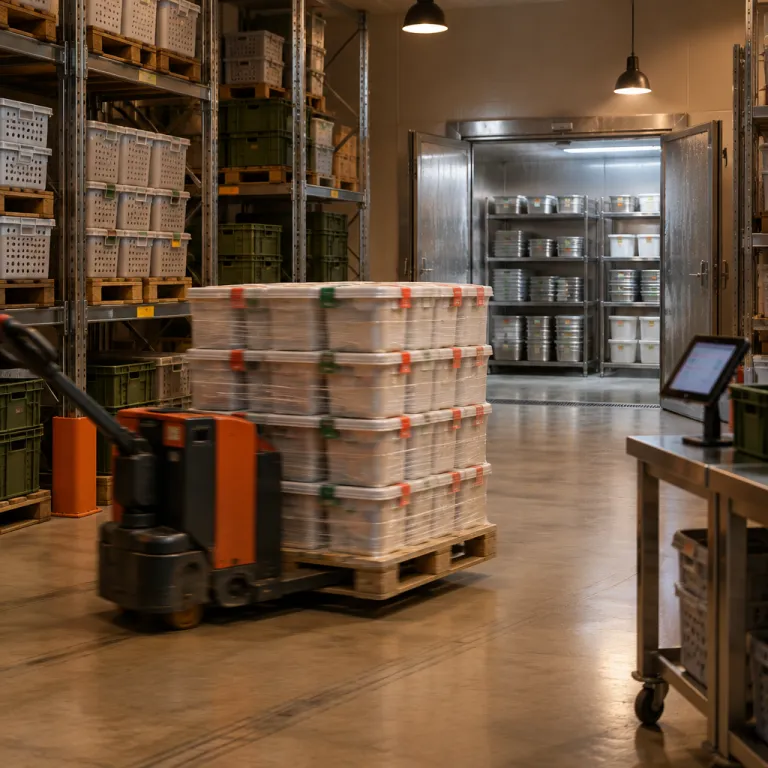
Why food grade 3PL warehousing matters for B2B hotel distribution compliance
For hotel groups scaling B2B distribution of food and beverage, a food grade 3PL warehouse is no longer a back office detail. It has become a strategic node where food safety, brand standards, and contractual obligations with corporate clients intersect in real time. When your hotel supply chain relies on compliant food storage and temperature controlled logistics, any failure in grade warehousing can cascade into guest complaints, penalties, and lost distribution deals.
Hospitality distribution leaders now treat food warehousing and storage distribution as part of the same risk map as rate parity or data privacy. A single certified grade warehouse handling finished goods for breakfast buffets, banqueting, and minibar products can serve dozens of properties, OTAs selling packages, and GDS connected corporate accounts. That concentration of food products, inventory, and logistics under one roof means that warehouse management, pest control, and temperature control are directly tied to your B2B sales promises.
When a 3PL warehouse food grade operation supports hotel chains, the regulatory perimeter widens quickly. You must align food storage and cold storage practices with FDA or equivalent national regulations, local health inspections, and brand level food safety protocols at the same time. Channel managers and responsables distribution therefore need visibility into warehouse facilities, product handling, and cold chain performance, not just room allotments and rate plans.
Regulation, certifications, and shared liability across the hospitality supply chain
Compliance for a 3PL warehouse food grade partner is built on a dense web of regulations and certifications. In the United States, federal food safety rules and food storage requirements issued by agencies such as the FDA intersect with state and municipal health codes, while in Europe, comparable frameworks such as HACCP based systems and ISO 22000 food safety management standards govern food products and food warehousing. For hotel groups operating cross border B2B contracts, this patchwork means that a single storage warehouse may need multiple certifications and documented grade warehousing procedures.
Distribution leaders should map which certifications apply to each product category and each warehouse location. Dry food, chilled food beverage, and frozen products often require different temperature controlled zones, separate handling flows, and specific pest control regimes inside the same grade warehouse. When omnichannel fulfillment is added, with cross docking for urgent banqueting orders and storage distribution for standard replenishment, the compliance matrix becomes even more complex.
Shared liability is the critical issue that channel managers often underestimate. If a certified 3PL warehouse fails to maintain cold chain integrity or loses inventory control, regulators and corporate clients may still hold the hotel brand responsible. This is why many groups now embed detailed food safety and storage management clauses into their distribution and channel management compliance frameworks, often supported by specialized hospitality compliance solutions for distribution and channel management. A typical clause will, for example, state that the 3PL must maintain HACCP documentation, provide temperature logs on request, and notify the hotel group within a defined time frame of any suspected contamination or deviation from agreed storage conditions.
Designing contracts with 3PL food grade warehouses for hotel B2B realities
Contracts with a 3PL warehouse food grade provider must reflect the operational realities of hotels, not generic retail templates. Breakfast peaks, conference banquets, and seasonal group tours create volatile demand for food products and finished goods that move through storage warehouse locations at irregular times. Your warehousing and logistics clauses therefore need to define service levels that match these hospitality specific rhythms, including cut off times, cross docking rules, and emergency replenishment windows.
Regulatory language in contracts should go beyond stating that the warehouse is certified and compliant. It must specify which certifications apply to which facilities, how often audits occur, and what happens if a grade warehouse loses a certification or fails an inspection. Clear allocation of responsibility for food safety, pest control, temperature monitoring, and product handling is essential, especially when multiple 3PL grade warehouses and transport partners share the same cold chain. Many hotel groups now attach an audit checklist to the contract, covering items such as cleanliness of loading bays, calibration of thermometers, segregation of allergens, and documentation of corrective actions.
Pricing and liability terms are now under closer scrutiny from regulators and corporate buyers in hospitality. As new pricing and fee transparency rules reshape hotel commercial practices, similar expectations are emerging around logistics surcharges, wastage, and write offs linked to food storage or cold storage failures. Legal and commercial teams should review warehouse contracts with the same rigor they apply to rate parity and fee clauses, using resources such as analyses of how a new pricing law creates near strict liability for hotel fee practices as a benchmark for risk thinking. In practice, this can mean defining caps on spoilage charges, setting clear thresholds for indemnification, and requiring the 3PL to carry specific insurance for food safety incidents.
Real time control, data integration, and channel management visibility
For responsables distribution and channel managers, the most powerful shift in 3PL warehouse food grade operations is data transparency. Modern food warehousing systems can stream real time information on inventory, temperature, and product movements into hotel group dashboards. When these data flows are integrated with CRS, PMS, and B2B sales platforms, distribution leaders can align food storage capacity with contracted room nights, group blocks, and MICE events.
Temperature controlled facilities now routinely use IoT sensors to track cold chain performance from storage warehouse to hotel dock. Alerts on temperature excursions, delayed cross docking, or anomalies in finished goods handling can be routed to both warehouse management and hotel operations teams. This shared visibility supports proactive food safety decisions, such as blocking a batch of food products from banquet menus before they reach guests, while also protecting B2B commitments to corporate clients. A hotel group might, for instance, receive an automated alert that a pallet of chilled desserts exceeded the maximum temperature for a defined period and immediately switch to an alternative menu for a corporate gala.
Data integration also enables more precise inventory control and storage distribution planning across grade warehouses. By linking demand forecasts from OTAs, GDS partners, and direct B2B contracts to warehouse logistics, hotel groups can reduce overstock, minimize food waste, and negotiate more efficient omnichannel fulfillment models. The same mindset that turns annual rooms sold into a distribution advantage, as illustrated by advanced B2B distribution strategies, can be applied to food beverage logistics to unlock margin and compliance gains.
Operational risk management from dock to buffet in hotel ecosystems
Risk management for a 3PL warehouse food grade partner does not end at the warehouse dock. Once food products leave temperature controlled facilities, the hotel supply chain must maintain food safety and regulatory compliance through transport, reception, and on property storage. Cold chain integrity is only as strong as the weakest link between the grade warehouse, the truck, and the hotel kitchen or minibar.
Distribution and B2B sales leaders should work with operations teams to map every step where food storage, handling, or pest control could fail. This includes cross docking platforms, shared storage distribution hubs, and back of house storage rooms in hotels that may not have the same certifications as the central warehouse. Clear standard operating procedures, training, and monitoring are required so that the benefits of certified food warehousing are not lost in the last kilometre.
Inventory management practices also influence risk exposure and compliance. Shorter storage times for high risk food beverage items, rotation rules for finished goods, and segregation of allergen containing product lines all need to be aligned between warehouse management systems and hotel property procedures. When these controls are synchronized, hotel groups can respond faster to recalls, audits, or client questions about food safety in B2B catering contracts. A simple internal checklist that confirms batch numbers, expiry dates, and storage temperatures at goods reception can significantly reduce the chance of non compliant products reaching guests.
Aligning B2B sales promises with compliant food logistics capabilities
B2B sales teams increasingly sell complex packages that combine rooms, meeting spaces, and food beverage components. To keep these promises credible, the underlying 3PL warehouse food grade capabilities must be fully understood and factored into commercial offers. A contract that guarantees specific menus, dietary options, and service levels implicitly depends on reliable food storage, cold storage, and grade warehousing performance.
Channel managers should involve logistics and warehouse management experts early in the design of new B2B products. When omnichannel fulfillment models are used to serve both retail guests and contracted corporate clients from the same storage warehouse, capacity constraints and safety rules must be translated into clear sales conditions. This includes lead times for large events, blackout periods linked to inventory control, and contingency plans if a grade warehouse or cold chain route is disrupted.
Aligning promises with capabilities also strengthens negotiation power with OTAs, GDS partners, and wholesalers. When you can demonstrate robust food safety certifications, real time monitoring of temperature controlled facilities, and disciplined pest control and handling procedures across all grade warehouses, you reduce perceived risk for buyers. That credibility supports premium positioning for meeting packages and long term B2B agreements that rely heavily on consistent food products and finished goods quality.
Strategic roadmap for hotel groups partnering with food grade 3PL providers
Hotel groups that treat a 3PL warehouse food grade partnership as a strategic asset rather than a commodity service gain a clear competitive edge. The roadmap starts with a thorough audit of existing warehousing, logistics, and food safety practices across all facilities and grade warehouses. From there, distribution leaders can prioritize investments in certified temperature controlled zones, upgraded storage distribution flows, and integrated inventory control systems.
Next, governance structures must bring together responsables distribution, channel managers, directeurs ventes B2B, procurement, and operations around a shared view of food warehousing risks and opportunities. Regular joint reviews with 3PL partners should cover certifications status, audit results, pest control performance, and cold chain reliability, as well as commercial KPIs such as wastage, write offs, and service level adherence. Over time, this collaborative management approach turns the warehouse from a black box into a transparent, data rich node in the hotel supply chain.
Finally, communication with corporate clients and distribution partners should highlight the strength of your food storage and food safety ecosystem without overselling. Clear, factual descriptions of certified warehouse facilities, temperature monitoring, and product handling standards build trust and support long term B2B relationships. As regulatory expectations tighten, hotel groups that have already embedded robust 3PL food grade warehousing into their distribution and channel management strategies will be better positioned to adapt and grow.
Key figures on food grade 3PL warehousing and hospitality compliance
- According to estimates consolidated by U.S. public health agencies and summarized by the Centers for Disease Control and Prevention (CDC), foodborne illnesses affect tens of millions of people annually in the United States, which underlines why rigorous food safety and certified storage practices are critical for any hospitality supply chain handling food products. These figures are based on epidemiological models that combine outbreak data, surveillance systems, and statistical estimation.
- Industry analyses from logistics consultancies report that temperature excursions account for a significant share of losses in cold chain logistics for perishable goods, often cited at up to around 20 %, showing how vital reliable temperature controlled facilities and monitoring are for hotel groups relying on 3PL cold storage. These estimates typically come from benchmarking studies of refrigerated transport and warehouse performance in North America and Europe.
- Surveys of global hotel chains indicate that food and beverage can represent between roughly 25 % and 40 % of total revenue for full service properties, meaning that disruptions or compliance failures in food warehousing and storage distribution can materially impact B2B sales performance. This range is consistent with data published in annual reports and industry research on full service hotel P&L structures.
- Research on warehouse automation shows that real time inventory tracking can reduce stock discrepancies by more than 30 %, which directly supports better control of finished goods and more accurate planning for banqueting and group catering in hotel ecosystems. These findings are typically based on case studies of facilities that implemented barcode or RFID based warehouse management systems.
- Studies on pest control and hygiene in food storage environments highlight that integrated pest management programs can cut infestation incidents by over 50 %, reinforcing the importance of structured pest control protocols in any grade warehouse serving hospitality clients. Such reductions are usually documented in longitudinal evaluations of food distribution centers before and after formal IPM adoption.
FAQ about 3PL food grade warehousing for hospitality distribution
How does a 3PL food grade warehouse support hotel B2B contracts ?
A 3PL food grade warehouse provides certified facilities, controlled temperature zones, and documented handling procedures that ensure food safety for products used in hotel catering and banqueting. This allows hotel groups to commit to specific menus, service levels, and event volumes in B2B contracts with greater confidence. Reliable warehousing and logistics also reduce the risk of last minute substitutions or cancellations that could damage relationships with corporate clients.
Which certifications should hotel groups require from 3PL food warehousing partners ?
Hotel groups should require certifications that align with their operating regions and brand standards, such as HACCP based systems, ISO 22000 for food safety management, and compliance with FDA or equivalent national regulations. For cold storage and temperature controlled operations, additional standards related to cold chain management and transport hygiene may be relevant. Contracts should specify which certifications apply to each facility and how often they are audited.
What data should channel managers request from a 3PL warehouse food grade provider ?
Channel managers should request real time or near real time data on inventory levels, batch and lot tracking, temperature logs for cold chain segments, and incident reports related to food safety or pest control. Integration of this data with CRS, PMS, and B2B sales tools enables better alignment between demand forecasts and storage distribution capacity. Historical data on service levels, stockouts, and wastage also helps refine commercial strategies and risk assessments.
How can hotels reduce risk when using multiple grade warehouses across regions ?
When using multiple grade warehouses, hotel groups should standardize food safety requirements, handling procedures, and reporting formats across all 3PL partners. Central governance should monitor certifications, audit outcomes, and key risk indicators such as temperature excursions or contamination incidents. Clear escalation paths and contingency plans, including alternative storage warehouse options, help maintain continuity for B2B clients if one facility faces a disruption.
What role do B2B sales teams play in food logistics compliance ?
B2B sales teams must understand the capabilities and limits of the 3PL warehouse food grade network that supports their offers. They should coordinate with logistics and operations to ensure that promised menus, volumes, and service times are realistic given storage, warehousing, and cold chain constraints. By aligning commercial commitments with certified logistics capacity, sales teams protect both client satisfaction and regulatory compliance.