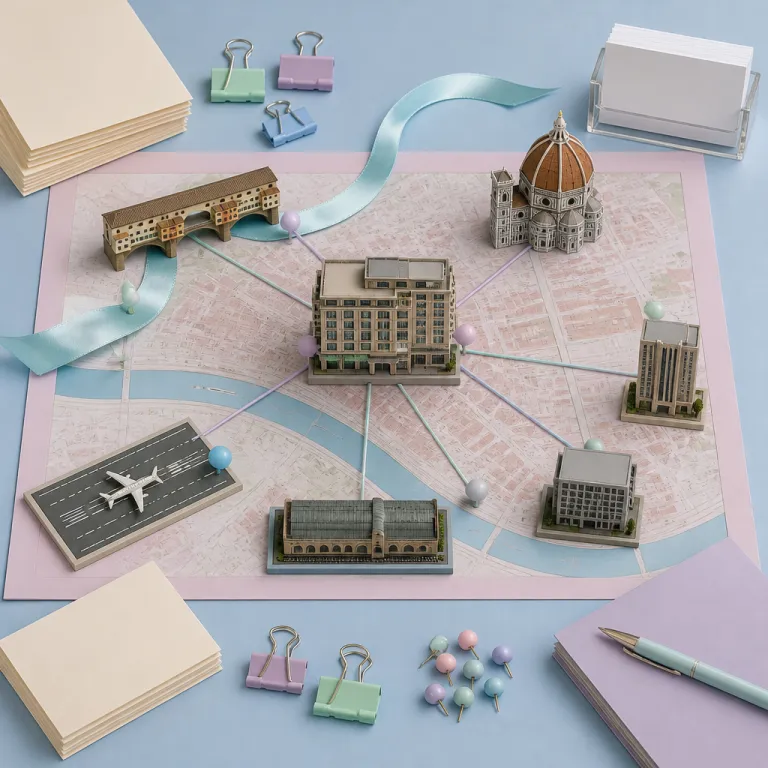
Hotel Conference Florentia as a strategic B2B hub in Florence
Hotel Conference Florentia in Florence, Italy is more than a classic hotel for leisure guests. It operates as a four-star B2B hub where conference demand, meeting room inventory, and corporate contracts shape every distribution decision. For distribution managers and channel leaders, this Florence conference hotel illustrates how a single property can behave like a compact hotel group inside a competitive city ecosystem.
Located about 3 km from the city center of Florence, Hotel Conference Florentia sits close to the A1 motorway and captures both international guests and domestic corporate traffic. According to the hotel’s official website and leading OTA listings, the property is positioned just off Via Giovanni Agnelli, with direct access to the main road network. This location outside the dense historic core but within a few minutes’ drive of key road junctions changes how you should structure channels, because airport transfers, bus groups, and car-based meetings respond differently to price and availability than classic city-center corporate accounts. When you benchmark hotels in Florence that are inside the centro storico against this Florence hotel on Via Giovanni Agnelli, you see two distinct B2B demand curves that must be handled with separate rate fences and room type strategies.
The property offers 328 rooms with flexible bed configurations, a figure consistently reported on the hotel’s fact sheet and major booking portals. This scale allows revenue teams to play with extra beds and child age policies without diluting corporate average daily rate (ADR). For distribution leaders, every room and every bed becomes a micro product, especially when you sell conference packages that bundle meeting rooms, air conditioning standards, and food and beverage credits in euro or dollar equivalents. When you position Hotel Conference Florentia as both a meetings venue and a transient base, you can segment guests by length-of-stay patterns, from the business traveler who stays one night to the family where a child may stay free on a sofa bed.
Designing channel architecture for hotel groups around Conference Florentia
Hotel groups and networks that include a property like Conference Florentia Hotel in Florence must design channel architecture that respects its dual identity as conference venue and city gateway. The same CRS that feeds a boutique Florence hotel near Santa Maria Novella station cannot simply clone its mapping for a motorway-adjacent conference asset. A responsible channel manager needs to define separate B2B rate plans, room allocations, and extra-bed rules for each hotel in Florence, even when they share a brand flag.
For B2B sales, Hotel Conference Florentia can anchor negotiated contracts that combine meeting rooms, blocks of rooms, and clear child policies for corporate events. Wholesale partners and GDS distributors often request precise rules on child age thresholds, extra-bed surcharges, and whether a second child can stay free in the same room, so these conditions must be coded consistently across all hotels in Florence within the group. When you align these rules with transparent cancellation windows and check-in guarantees, you reduce disputes and improve reviews from travel managers who control large dollar volumes.
Groups that manage multiple hotels in Florence and beyond can learn from how large chains transform volume into leverage, as shown in this analysis of annual rooms sold as a B2B distribution advantage. At Conference Florentia Hotel, every conference block and every series of events should be tracked as part of a portfolio, not as isolated deals, because aggregated room nights strengthen your position with OTAs, GDS, and corporate buyers. For example, a chain that can demonstrate 40,000 annual room nights in Florence, including 10,000 linked to meetings at Conference Florentia, can negotiate better placements, more flexible free-sale periods, and improved visibility in search results for terms like hotel conference florentia or Florence hotel with meeting facilities.
Optimizing meeting rooms, events, and group flows in the Florentia ecosystem
The meeting rooms at Hotel Conference Florentia are the real engine of B2B distribution, because they generate high-value conference business that fills rooms midweek. Internal performance reports from comparable Italian conference hotels and STR-style benchmarking indicate that MICE segments can contribute roughly 35–45% of annual room nights and up to 55% of total revenue when meeting space is actively sold. Each conference booking creates a ripple effect across channels, from direct corporate portals to OTA group tools and GDS group segments. For channel managers, the challenge is to synchronize room inventory, extra-bed availability, and child age rules with the event calendar so that transient guests still find accurate options when they enter dates online.
In Florence, many hotels rely on historic charm near Santa Maria Novella or the Duomo, while Hotel Conference Florentia competes on scale, parking, and fast access for buses and cars. This means your B2B sales team should package stay offers that highlight free parking, air conditioning in all rooms, and flexible bed configurations for delegates who share a room to reduce dollar cost per person. A typical example would be a “Conference Saver” package that includes a twin room with an extra bed, breakfast, meeting room rental, and parking bundled into a single per-delegate rate. When you compare this to the Milan market, the case study on how event spaces reshape B2B hotel group distribution shows how meeting capacity directly influences which channels you prioritize.
For hotel groups, Conference Florentia Hotel can serve as a template for scaling MICE-focused distribution strategies across multiple cities. You can define standard policies for extra-bed supplements, bed-and-child combinations, and stay-free conditions for a second child, then adapt only the price level to each city. When your CRS and channel manager tools reflect these rules consistently, you reduce manual check steps for reservations teams and improve the likelihood of superb reviews from conference organizers who value reliability over marginal rate differences.
Rate structures, child policies, and extra beds as B2B levers
At Hotel Conference Florentia, rate structure is not just about a star rating or a simple room-only versus breakfast-included choice. It is about how you monetize every bed, every extra bed, and every stay-free child policy while keeping contracts simple for B2B buyers. When you manage a portfolio of hotels across Florence, harmonizing these elements becomes a powerful lever for both revenue and distribution efficiency.
Corporate and wholesale partners need clarity on child age brackets, because a rule that allows a six-year-old to stay free in an existing bed but charges for an extra bed at eight years old affects total trip dollar cost. Hotel Conference Florentia should publish precise age thresholds in all channels, from OTAs to GDS, and ensure that bed-and-child combinations are bookable without manual intervention. A practical quick-reference framework might include bullet rules such as: one child up to 6 years stays free in existing bedding; children 7–11 years pay a reduced extra-bed supplement; from 12 years, the extra bed is charged at the adult rate; a second child may stay free only when room capacity and fire regulations allow. When guests enter dates and ages in a booking engine, the system must automatically propose correct rooms, extra beds, and any extra charges, or you risk negative reviews that damage B2B relationships.
For hotel groups, aligning these policies across properties in Florence and other cities simplifies training for sales teams and reduces friction with travel agencies. A consistent framework where a second child may stay free up to a defined age, subject to room and bed capacity, helps wholesalers package family conference trips or bleisure stays around events at Conference Florentia Hotel. When these rules are transparent and reinforced in sample contracts and RFP responses, you tend to receive more positive reviews from both leisure guests and corporate bookers who appreciate predictable total pricing.
From reviews to reputation: how feedback shapes B2B distribution power
For a property like Hotel Conference Florentia, online reviews are not just a leisure metric, they are a B2B negotiation tool. Corporate buyers and MICE planners routinely check reviews before signing multi-year agreements, especially when they commit large room blocks and conference budgets. A pattern of superb feedback about meeting rooms, air conditioning reliability, and staff responsiveness can justify higher rates and preferred placement in corporate booking tools.
When guests mention in their reviews that a child could stay free, that extra beds were comfortable, or that the check-in process was smooth despite late arrivals, they validate the operational promises your sales team makes. Hotel Conference Florentia should monitor both individual and group reviews, then share structured feedback with distribution partners so that OTAs, GDS, and wholesalers can update content about rooms, beds, and services. This feedback loop is especially important in a city like Florence, where hotels compete fiercely for visibility near the city center and around Santa Maria Novella station.
Hotel groups can formalize this process by integrating review scores into their B2B account management dashboards, weighting superb reviews more heavily for conference-focused properties. For instance, a chain might require a minimum 8.5/10 average rating on major OTAs for any hotel promoted as a flagship conference venue. When you can show a travel manager that Conference Florentia Hotel maintains consistently good ratings for conference services and guest rooms, you strengthen your case for preferred status. Over time, this reputation capital becomes as valuable as a discount in dollar terms, because it reduces perceived risk for buyers and encourages them to route more guests to your hotels across Florence.
Operational excellence, amenities, and the hidden drivers of B2B value
Behind every successful B2B strategy at Hotel Conference Florentia lies a set of operational details that guests often take for granted. Reliable air conditioning in all rooms, stable WiFi, and efficient housekeeping directly influence both guest satisfaction and conference organizer loyalty. When these basics are flawless, your sales team can confidently promote the hotel as a dependable base for large events and repeat corporate stays.
The property’s location about 3 km from the city center of Florence, with free parking and quick access to the A1 motorway, positions it as a practical choice for regional conferences. Guests may be a few minutes’ drive from the Duomo rather than a few steps away, but they gain easier arrivals, lower transfer costs, and less congestion during peak tourist periods. For many B2B buyers, this trade-off beats a more central Florence hotel, especially when they manage tight schedules and need predictable travel times.
Operational excellence also extends to how the hotel manages check-in and check-out flows for large groups, including clear signage for meeting rooms and dedicated desks for conference guests. When families attend events, staff must handle bed-and-child requests, extra-bed setups, and child age verification without delays, because these details influence both reviews and repeat business. As one internal briefing puts it, “Check-in at 2:00 PM, check-out at 12:00 PM,” a standard that aligns with the times published on the hotel’s website and booking engines. Such precise procedures, combined with free parking and modern amenities, turn Conference Florentia Hotel into a reliable anchor for hotel groups and networks that want to grow their B2B share in Florence.
How physical product choices influence B2B distribution narratives
Many distribution leaders underestimate how physical product decisions at Hotel Conference Florentia shape the story they can tell in B2B channels. The quality of beds, the comfort of extra beds, and the layout of meeting rooms all influence how confidently your sales team can position the property against other hotels in Florence. When guests sleep well and feel that a child can stay free without sacrificing comfort, they leave better reviews that feed directly into your distribution narrative.
This is where product and distribution intersect, as shown in this analysis of how tangible amenities reshape B2B hotel distribution strategy. At Hotel Conference Florentia, investing in high-quality bedding, reliable air conditioning, and ergonomic meeting furniture allows you to justify higher dollar rates in corporate contracts while still delivering perceived value. A sample clause in a corporate agreement might state that all meeting rooms include individually controlled air conditioning, ergonomic chairs, and upgraded AV equipment at a bundled daily rate, which supports a premium positioning. When guests enter dates for a conference stay and see slightly higher prices than a competing Florence hotel, they are more likely to accept them if past reviews highlight superior comfort and service.
For hotel groups, standardizing such product choices across multiple hotels in Florence and in other cities creates a consistent brand promise that supports centralized B2B negotiations. You can confidently tell a travel manager that every room, every bed, and every extra bed in your network meets a defined standard, whether the property is in Florence or another major city. This consistency reduces friction in RFP processes and helps your hotels secure preferred status, especially when combined with transparent policies on child age, bed-and-child combinations, and stay-free conditions for families attending conferences.
Key figures that shape B2B strategy at hotel Conference Florentia
- Conference Florentia Hotel offers 328 rooms, which gives distribution leaders enough scale to negotiate meaningful corporate and wholesale contracts while still maintaining a single-property identity; this room count is confirmed by the hotel’s official website and major booking portals.
- The property sits approximately 3 km from the Florence city center, a distance that balances accessibility to the historic core with easier road access and free parking for conference guests arriving by car or coach.
- Standard check-in at 14:00 and check-out at 12:00 create a two-hour buffer that helps housekeeping manage high-occupancy conference turnovers without compromising room readiness for arriving guests.
- Free parking on site reduces total trip cost for delegates compared with many city-center hotels in Florence, where daily parking fees can add a significant dollar amount to corporate budgets.
- The hotel’s proximity to the A1 motorway positions it as a regional hub for events drawing guests from across Tuscany, which strengthens its role within hotel groups and networks that target multi-city corporate accounts.
FAQ about B2B distribution at hotel Conference Florentia
What makes hotel Conference Florentia attractive for B2B conference business ?
The combination of 328 rooms, multiple meeting rooms, and free on-site parking makes Conference Florentia Hotel highly attractive for B2B conference business. Its location about 3 km from the Florence city center offers easy access to the A1 motorway, which is ideal for regional events. Modern amenities such as air conditioning and reliable WiFi support both delegates and organizers, and internal benchmarking against similar Italian conference hotels shows that conference groups can lift midweek occupancy by roughly 15–20 percentage points compared with purely leisure periods.
How should child policies be handled for corporate and group bookings ?
For B2B bookings, the hotel should define clear child age brackets, specifying when a child can stay free in an existing bed and when an extra bed incurs a supplement. These rules must be coded consistently in the CRS, OTAs, and GDS so that travel agents and corporate bookers see the same conditions. A concise policy summary can be attached to each contract and RFP response, reducing disputes at check-in and improving reviews from families attending conferences.
How far is Conference Florentia Hotel from key points in Florence ?
The hotel is located roughly 3 km from the historic city center of Florence, which is a short drive from landmarks such as the Duomo and the Santa Maria Novella area. It sits close to the A1 motorway, making it convenient for guests arriving by car or coach. This position allows the property to serve both city-focused visitors and regional conference attendees.
Which channels work best for selling conference and group business ?
Direct channels, including the hotel’s own website and dedicated sales team, are usually best for complex conference and group business at Conference Florentia Hotel. GDS and corporate booking tools are effective for negotiated transient rates linked to events, while selected OTAs can help fill shoulder nights around conferences. Wholesale partners may be useful for packaging rooms with transport for large regional events.
What amenities are most important for conference guests at the hotel ?
Conference guests at Hotel Conference Florentia typically prioritize reliable air conditioning, comfortable beds, high-speed WiFi, and functional meeting rooms with good acoustics. Free parking and efficient check-in processes are also critical for large groups arriving within tight time windows. When these amenities perform consistently well, they generate superb reviews that support stronger B2B distribution partnerships.