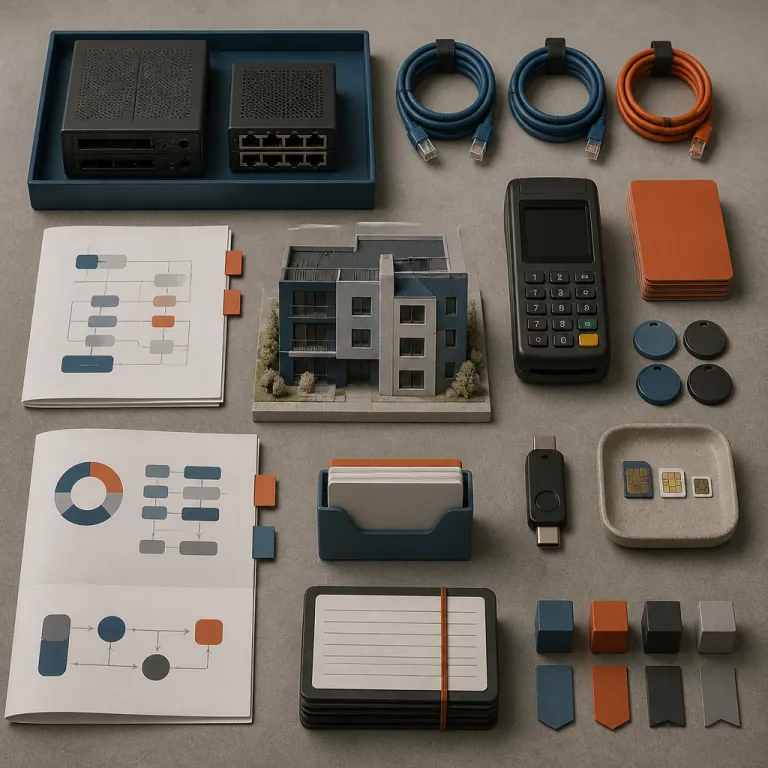
The six layers of a modern hotel direct booking tech stack
A serious hotel direct booking tech stack starts with six tightly integrated layers, not a lonely booking engine on an outdated website. When distribution managers map these layers against their current hotel technology stack, they usually see why website conversion stalls at 2 to 3 percent while OTA partners quietly convert the same guest at 5 percent or more. The gap is rarely marketing spend ; it is almost always fragmented systems, slow data flows, and a property management system that never speaks real time to the rest of the stack.
At the core sits the booking engine, but it only performs when the surrounding hotel tech is aligned with revenue management and guest experience goals. Around it you need a robust payment gateway for secure payment processing, a CRM for unified guest profiles, marketing automation for triggered journeys, analytics for granular funnel tracking, and a personalization layer that adapts content in real time. Each of these systems must read and write data to the PMS, the channel manager, and any central reservation system so that hotel booking flows stay accurate, fast, and trustworthy for both guests and B2B partners.
For distribution leaders in the hospitality industry, the direct booking engine is now just one node in a broader technology stack that also includes the RMS, metasearch connectivity, and even GDS rate loading. The question is no longer whether a hotel has a tech stack, but whether its tech stacks are coherent enough to support long term hotel revenue growth without adding manual work for every property manager. When the six layers operate as one management system, hotels can shift share from OTAs to direct bookings while protecting rate parity and net revenue.
Layer one – booking engine, CRS and channel manager as a single distribution spine
The first layer of any hotel direct booking tech stack is the distribution spine that connects the booking engine, the CRS or central system, and the channel manager. This is where most hotels still lose margin because the booking engine is configured as a marketing widget, while the CRS and channel manager are treated as back office tools for B2B sales and wholesale allotments. In reality, these three systems must behave as one unified distribution system that exposes the same rates, restrictions, and room types to every channel in real time.
For multi property groups, the CRS becomes the central property management and inventory brain, orchestrating availability across brands, regions, and contracted partners. The channel manager then pushes that inventory to OTAs, GDS, and wholesalers, while the booking engine surfaces the same data to the direct website and mobile flows. When this distribution technology stack is misaligned, you see classic problems ; closed dates on the hotel website while OTAs still sell, or opaque package rates that undercut direct bookings and erode hotel revenue.
Channel for Travel has already shown how a modern cloud PMS and distribution hub can reshape B2B access in its analysis of Visual Matrix cloud login and B2B hotel distribution. The same logic applies to your direct booking engine ; if the engine PMS connection is weak, the property manager will never trust the numbers and will keep manual controls that slow down the system. In a competitive hotel industry where metasearch and Google Hotel Ads capture a third of traffic, this distribution spine must be engineered as critical infrastructure, not a side project for the marketing équipe.
Layer two – PMS, engine PMS connectivity and revenue management alignment
The second layer of the hotel direct booking tech stack is the operational core, where the PMS, the engine PMS interface, and the revenue management system work together. A Property Management System (PMS) is a system managing hotel operations like reservations and housekeeping. When this PMS is tightly integrated with the booking engine and the RMS, every direct booking updates availability, rates, and guest profiles in real time without human intervention.
For distribution and revenue leaders, the real power lies in how the PMS and RMS share data to drive pricing decisions that the booking engine can execute instantly. A Revenue Management System (RMS) analyzes data and sets optimal room rates for maximizing revenue, but if those rates reach the booking engine and channel manager with a delay, parity breaks and OTAs win the conversion. That is why many groups now prioritize cloud PMS platforms with strong APIs and dashboards, as shown in the analysis of real time occupancy and revenue dashboards in PMS systems.
For a single property hotel, a lean management system that combines PMS, basic revenue management, and a booking engine can still deliver strong hotel revenue if the integrations are stable and latency is low. For larger hotels and chains in the hospitality industry, the technology stack must support complex B2B contracts, group blocks, and multi channel rate strategies without manual spreadsheets. When the PMS, RMS, and booking engine behave as one hotel technology layer, the guest sees accurate availability, the manager sees clean data, and the revenue team can finally focus on strategy instead of firefighting.
Layer three – CRM, unified guest profiles and marketing automation
The third layer of the hotel direct booking tech stack is the guest relationship engine, built around CRM, unified profiles, and marketing automation. A Customer Relationship Management (CRM) platform stores guest data and manages communications, turning anonymous website visitors into known profiles that can be nurtured over time. In practice, this means every hotel booking, whether from OTAs, GDS, or direct channels, must flow into a single guest profile that the CRM can use for segmentation and personalization.
For distribution managers, this layer is where direct bookings become a compounding asset rather than a one time transaction. Email marketing typically runs at 2 to 4 percent acquisition cost, far below most paid channels, while loyalty rebooking campaigns can deliver 3 to 5 percent conversion on past guests when the data is clean. The challenge is that many hotels still operate with fragmented systems, where the PMS, channel manager, and booking engine each hold partial data, which is why unified guest profiles and hospitality data platforms are becoming central to distribution decisions, as explored in the analysis on unified guest profiles versus fragmented data.
Marketing automation tools then sit on top of the CRM to trigger campaigns based on real time behavior, such as abandoned booking flows, pre arrival upsell offers, or post stay feedback requests. When these systems are connected back to the PMS and the booking engine, every campaign can be measured in terms of incremental hotel revenue and net RevPAR, not vanity metrics. For hotels and hotel groups that want a future proof technology stack, investing in CRM and automation is no longer optional ; it is the only way to turn the guest database into a long term distribution advantage.
Layer four – payment, security and frictionless checkout
The fourth layer of a modern hotel direct booking tech stack is payment and checkout, where many hotels still leak conversion and revenue. A Payment Gateway ensures secure and efficient processing of online payments, but in hospitality the nuance lies in handling pre authorizations, partial deposits, and multi currency flows across different markets. When payment processing is clunky or untrustworthy, guests abandon the booking engine and return to OTAs that offer one click wallets and stored cards.
For the property manager and finance équipe, the payment system must reconcile seamlessly with the PMS and accounting tools, reducing chargebacks and manual errors. This means the booking engine, payment gateway, and PMS should share transaction data in real time, so that folios, refunds, and no show fees are aligned across systems. In multi property hotels and chains, a centralized payment solution can also negotiate better rates with providers and standardize security practices across the technology stack.
From a distribution and B2B sales perspective, strong payment solutions also support corporate and wholesale contracts that require virtual cards, invoicing, or deferred payment terms. In the hospitality industry, where mobile first booking now represents roughly three quarters of traffic, the payment experience must be optimized for small screens, local wallets, and fast authentication. Hotels that treat payment as a strategic part of their hotel technology, rather than a back office detail, consistently see higher direct bookings, better guest satisfaction, and more predictable hotel revenue over the long term.
Layer five – analytics, attribution and revenue management intelligence
The fifth layer of the hotel direct booking tech stack is analytics and intelligence, where data from every system is transformed into decisions. A Revenue Management System (RMS) is already positioned as the pricing optimizer, but its output is only as strong as the data it receives from the PMS, booking engine, channel manager, and CRM. When these systems feed clean, timely data into a central analytics layer, revenue management can finally move from reactive pricing to proactive demand shaping.
For distribution leaders, the key is to track the full funnel from marketing impression to hotel booking, not just last click conversions. This means combining web analytics, booking engine data, CRM engagement, and PMS stay data into dashboards that show true net revenue by channel and campaign. Industry reports indicate that hotels with integrated analytics and AI driven personalization can lift direct booking conversion from 2 to 3 percent up to 4 to 5 percent, effectively doubling the efficiency of their marketing spend.
Operationally, analytics should also surface real time occupancy, pace, and segment mix so that the property management and sales équipes can adjust B2B contracts, close out low margin channels, or push targeted offers. When the management system exposes these insights to both the hotel manager and the corporate revenue team, decisions about tech stacks, distribution mix, and investment become data led rather than political. In a hospitality industry where OTA commission savings of around 20 percent can be redirected into owned channels, the analytics layer is the control tower that keeps the entire technology stack aligned with profit, not just topline revenue.
Layer six – personalization, AI and build versus buy decisions
The sixth layer of the hotel direct booking tech stack is personalization and AI, which now sits across the entire journey from media to checkout. AI driven personalization customizes ads, emails, and booking flows by traveler type, using signals from CRM, web behavior, and past stays to present the right offer at the right time. For hotels, this means the booking engine, website CMS, and marketing tools must expose APIs that allow dynamic content, pricing nudges, and tailored upsell paths.
For technology leaders deciding between build and buy, the question is where differentiation really lives in their hotel technology. Core systems such as PMS, channel manager, and payment gateways are usually better bought as standardized solutions, while personalization logic, data models, and proprietary algorithms can be layered on top as custom assets. In practice, this often means selecting a flexible booking engine and CRM, then building bespoke AI models that score guest value, predict cancellation risk, or recommend the best package for each segment.
From a long term perspective, a future proof technology stack is one that can evolve as new channels, devices, and guest expectations emerge. The hospitality industry has already seen mobile first booking reach around 75 percent of traffic, and voice or conversational interfaces are starting to influence search behavior. Hotels that architect their tech stacks around open APIs, modular systems, and clear data ownership will be able to plug in new AI tools, experiment with different personalization engines, and keep direct bookings growing without ripping out their entire management system every few years.
Key statistics for direct booking technology and distribution
- Industry reports show that a well integrated hotel direct booking tech stack can drive a direct booking increase of around 15 %, mainly by improving website conversion and repeat stays.
- Financial analyses indicate that shifting share from OTAs to direct channels can generate OTA commission savings of roughly 20 %, which can be reinvested into CRM, personalization, and better hotel technology.
- Average hotel website conversion typically sits between 2 and 3 %, while top performing hotels with optimized booking engines, payment flows, and personalization reach 4 to 5 % or more.
- Google Hotel Ads and other metasearch platforms capture approximately 32 to 35 % of metasearch traffic, making metasearch connectivity a critical part of the direct booking acquisition strategy.
- Mobile first booking now represents close to 75 % of traffic in many markets, which forces hotels to prioritize mobile UX, fast payment processing, and responsive booking engine design.
- Email marketing campaigns usually operate at 2 to 4 % acquisition cost, while loyalty and rebooking campaigns can reach 3 to 5 % conversion, turning CRM and automation into high ROI components of the technology stack.
FAQ – direct booking tech stack and centralized distribution
What is a PMS and why does it matter for direct bookings ?
A Property Management System (PMS) is the central operations hub that manages reservations, housekeeping, and guest profiles for a hotel. When the PMS is tightly integrated with the booking engine and channel manager, availability and rates stay accurate in real time across all channels. This reliability builds guest trust, reduces overbooking, and allows revenue management to push dynamic pricing directly to the hotel website.
Why should hotels use a channel manager if they focus on direct bookings ?
A channel manager synchronizes rates and availability across multiple booking channels, including OTAs, GDS, and wholesalers. Even when a hotel prioritizes direct bookings, it still needs controlled exposure on third party channels to reach new segments and maintain base demand. A strong channel manager integration ensures that direct rates remain competitive, parity is maintained, and manual updates do not erode margin or create costly errors.
How does a CRM support the hotel direct booking tech stack ?
A CRM stores guest data and manages communications, turning each stay into a long term relationship rather than a one off transaction. By consolidating data from the PMS, booking engine, and other systems, the CRM enables segmentation, personalized offers, and automated campaigns that drive repeat direct bookings. This reduces acquisition costs, improves guest satisfaction, and strengthens the hotel’s own distribution power within the hospitality industry.
What is the role of an RMS in a direct booking strategy ?
A Revenue Management System (RMS) analyzes data and sets optimal room rates for maximizing revenue across all channels. When connected to the PMS, booking engine, and channel manager, the RMS can push price changes in real time, ensuring that the hotel website always reflects the best available strategy. This alignment helps hotels protect net rate, close unprofitable channels when needed, and move share toward direct bookings without sacrificing occupancy.
Why is a payment gateway critical in the direct booking journey ?
A Payment Gateway ensures secure and efficient processing of online payments, which is essential for guest trust and conversion. In the direct booking flow, the payment system must handle deposits, pre authorizations, and refunds while integrating with the PMS and accounting tools. A smooth, mobile optimized payment experience reduces abandonment, supports international guests, and protects hotel revenue through better fraud control and reconciliation.